Education for teams that work under pressure.

Tailored lectures and workshops on communication, conflict and difficult conversations — for healthcare and social-care institutions, schools, public companies, management teams and any organization whose staff face demanding people every day.

The content is prepared for your line of work and your situations. Delivery is in person, as a rule at your premises, and participants receive a certificate of attendance.

Arrange an introductory conversation

A few sentences are enough. You do not have to choose a programme in advance.

When organizations usually call us

Organizations usually come to us when situations in working with people demand more than ordinary arrangements, instructions or goodwill can resolve.

Familiar situations

  • The same conflicts return, even though people have already talked them through.
  • Everyone on the team handles a similar situation differently; from outside it looks like chance.
  • Conversations with clients, patients, users, parents or colleagues escalate faster than they need to.
  • Under pressure people lose their professional footing — and that weighs on them afterwards more than the incident itself.
  • Tension between departments carries over into everyday cooperation.
  • Managers postpone difficult conversations until they are too big to be short.
  • Staff know the theory but cannot put it to use in the actual situation.

If it is left unaddressed

The consequences do not show up all at once. They show up in the time spent repairing misunderstandings, in complaints and repeated explanations, in who starts avoiding which tasks, and in who the team eventually loses.

None of this means the staff are bad at their work. It means only that they have no shared language and no shared way of handling these situations — and that is a matter of training, not of character.

What should be different afterwards

These are the intentions of the programme, not guaranteed results. Afterwards, participants should find it easier to:

  • recognize when a misunderstanding is turning into a conflict — while it is still small;
  • carry a difficult conversation through without escalating it unnecessarily;
  • tell apart what is the actual issue, what is an emotional reaction and what is a contest over power;
  • stay in their professional role under pressure;
  • respond to similar situations more consistently than before;
  • use shared terms for the situations that keep recurring;
  • carry what they learn into real work situations, not only into the exercise in the room.

How much of this a team actually uses also depends on how much room it has afterwards. One workshop does not remove causes that lie in the organization itself.

How we work

We do not run the same workshop for every organization. Before delivery we want to understand who your staff are dealing with, where the conversations get tangled, and what they need to be able to do differently.

The content, the examples, the depth, the length and the format are adapted. The professional foundation is not: it stays the same and comes from clinical work and from years spent in environments where a mistake in communication is expensive. The theory remains professional; the examples are yours.

A workshop for a public utility and a workshop for a management team are not the same workshop.

Programmes

Two programmes, both about the same thing: what to do while the conversation is still running.

The full programme

Communication and resolving conflict situations

For teams in which conflicts keep returning and difficult conversations are part of every day — in healthcare, social care, education, public services, and anywhere the person across the table is not someone you chose.

  • how a conflict builds and what keeps it going;
  • what can be done while the conversation is already under way;
  • how to stay in a professional role when the other person is distressed or angry;
  • work on cases the participants bring themselves.

Six school hours · delivered in person

The shorter form

Communication in the workplace

For teams that need a common language for everyday exchanges — between colleagues, between departments and with a manager — rather than a full conflict programme.

  • where a message is lost between what is said and what is heard;
  • how to say a difficult thing so that it can be heard;
  • shared terms for the situations that recur in your team;
  • work on cases from your own working environment.

Five pedagogical hours · delivered in person

Both programmes are delivered at your premises. If you would rather hold it away from the workplace, a room at Perihoreza in Ljubljana can be arranged. What makes sense for your situation — a lecture, a workshop or a longer form — is agreed in the introductory conversation.

An empty room with an oak table by a tall window; afternoon light falls across a plastered wall

Where this work is most useful

For people who have to work well with others even when they cannot choose those others, the circumstances, or how they react.

Healthcare institutions Social care Education Public companies and public institutions Management teams Work with demanding users and clients High-responsibility, high-pressure environments

Who delivers it

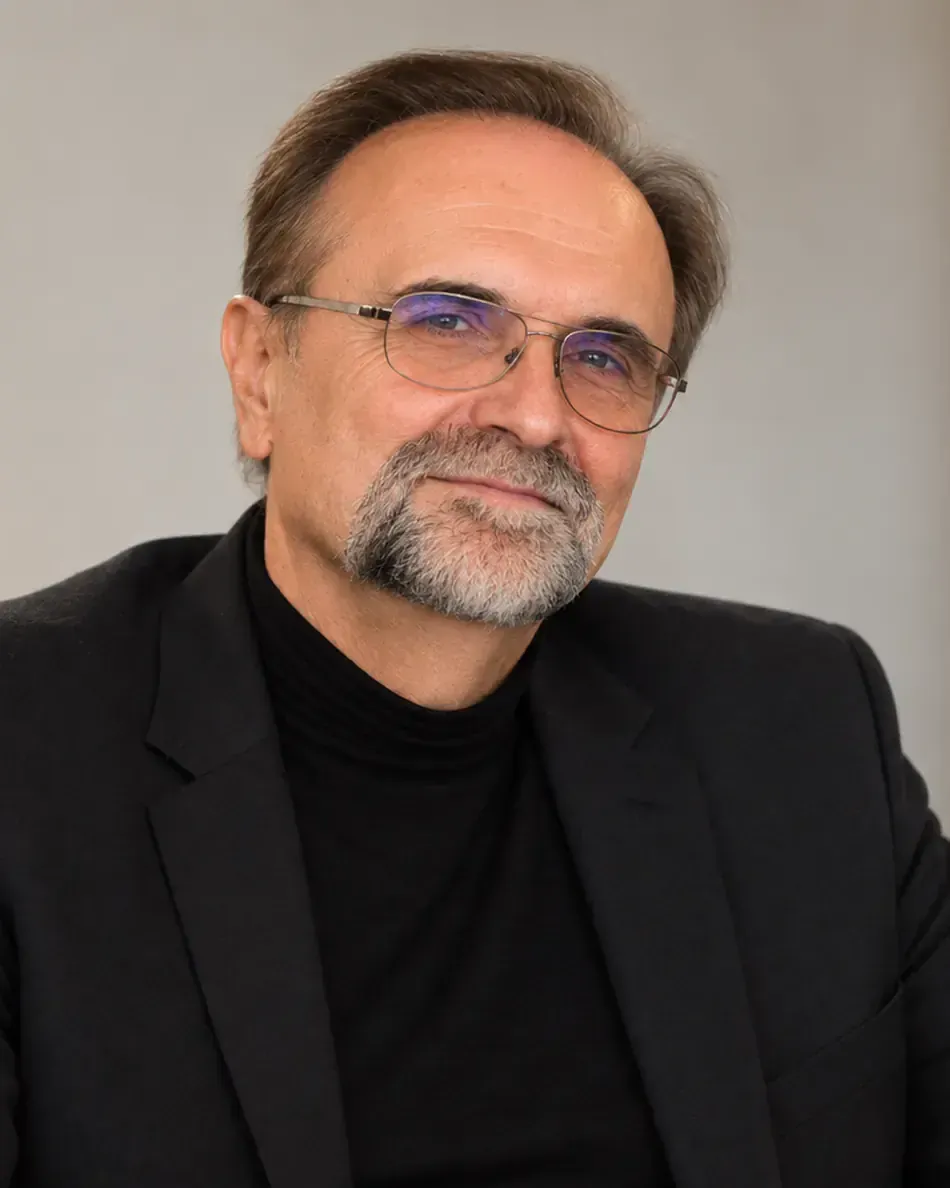
Željko Ćurić, a portrait against a light background; a black jacket over a black roll-neck, thin metal-rimmed glasses, a short grey beard, a slight smile, looking just past the camera

Željko Ćurić

Medical Doctor · Psychiatrist · Educator

Why should this particular person teach your team about communication and conflict?

Because he does not lecture on them from a manual. A physician and specialist in psychiatry, with more than three decades of work with individuals, groups and organizations — and with professionals working in exceptionally demanding environments.

  • Physician, specialist in psychiatry
  • More than thirty years of work with individuals, groups and organizations
  • Adviser to the Special Police Unit — negotiation in high-risk crisis situations
  • Business and sport psychology
  • Designs and delivers advanced educational programmes for organizations and professional teams

Full profile

References

We do not name our clients. An organization that commissions training on conflict has its own reason for doing so, and that reason is not for publication — unless they expressly give us written permission.

What we can say is what the teaching stands on: clinical work with individuals and groups, years of educating professionals and managers, and advisory work in environments where conversations are held under high risk.

If you need a reference for a public procurement procedure, we prepare one for that procedure and send it to you directly.

How working together goes

01

Introductory conversation

First we understand what is happening, who would take part, and what should be different afterwards. A conversation with whoever knows the situation is enough for that.

02

Proposed delivery

On the basis of that conversation we propose the content, the format, the length and a suitable number of participants. If it turns out that training is not what would help, we say so.

03

Preparation on your own situations

The examples are written for your line of work and for the situations that recur in it. That is work done before delivery, not improvisation during it.

04

Delivery and certificates

Delivery is in person. Participants receive a certificate of attendance, issued by Perihoreza and signed by the lecturer.

Common questions

Is the programme suitable for management teams and for mixed groups?

Yes. We work with teams and with leadership. The composition of the group affects how the session is set up — managers and their staff in the same room do not speak as freely as they would separately — so the composition is agreed in the introductory conversation.

How large should the group be?

We propose the number of participants after the introductory conversation, because it changes the form of the work: a smaller group allows work on each participant's own cases, a larger one is closer to a lecture. That is why there is no single number on this page.

Can it be delivered across several connected sessions?

The two programmes described above are designed as self-contained deliveries. If work across several sessions would make sense in your organization, say so in the introductory conversation — the format and length are adapted, and the scope is agreed in advance.

Do participants work on real cases from our organization?

Yes, and that is the point. The examples are prepared for your line of work, and during delivery we also work on situations the participants bring themselves.

How is confidentiality handled?

What may and may not be reported back to the client is agreed before delivery, and participants are told about it. Without such an agreement people do not bring the cases that are most useful to work on. How we handle personal data is set out in our privacy policy.

Is a standalone lecture possible?

Lectures are part of what we do. Which topic and what scope make sense for your situation is agreed in the introductory conversation; the two programmes described above are the ones we deliver as standing formats.

Do you deliver outside Ljubljana?

Delivery is as a rule at your premises, that is, where the team works. If it suits you better to hold it away from the workplace, a room at Perihoreza in Ljubljana can be arranged. The location is confirmed in the introductory conversation.

Contact

Let us talk about the situation in your organization.

Tell us what keeps recurring in the team, who would take part, and what you would want to be different afterwards. On that basis we will propose a sensible next step.

A few sentences are enough. You do not have to choose a programme in advance.

Address

Perihoreza, izobraževanje & svetovanje
Koprska ulica 98
1000 Ljubljana, Slovenia

Every field except the one marked optional is needed for us to reply.

Please tell us your name.

Please give the name of your organization.

Please leave an email address or a telephone number.

Briefly, what keeps recurring in the team.

We send the message for you. If sending fails, your email application opens with the text already written.

What you send us is used solely to answer your enquiry and is not shared with anyone else. More in our privacy policy.